FLIPSTYLEZLLC
GY- BNO080 BNO085 AR VR IMU High Accuracy Nine-Axis 9DOF AHRS Sensor Module
GY- BNO080 BNO085 AR VR IMU High Accuracy Nine-Axis 9DOF AHRS Sensor Module
Couldn't load pickup availability
SPECIFICATIONS
Brand Name: Ah robot
Choice: yes
Condition: New
High-concerned chemical: none
Origin: Mainland China
Type: Voltage Regulator
semi_Choice: yes
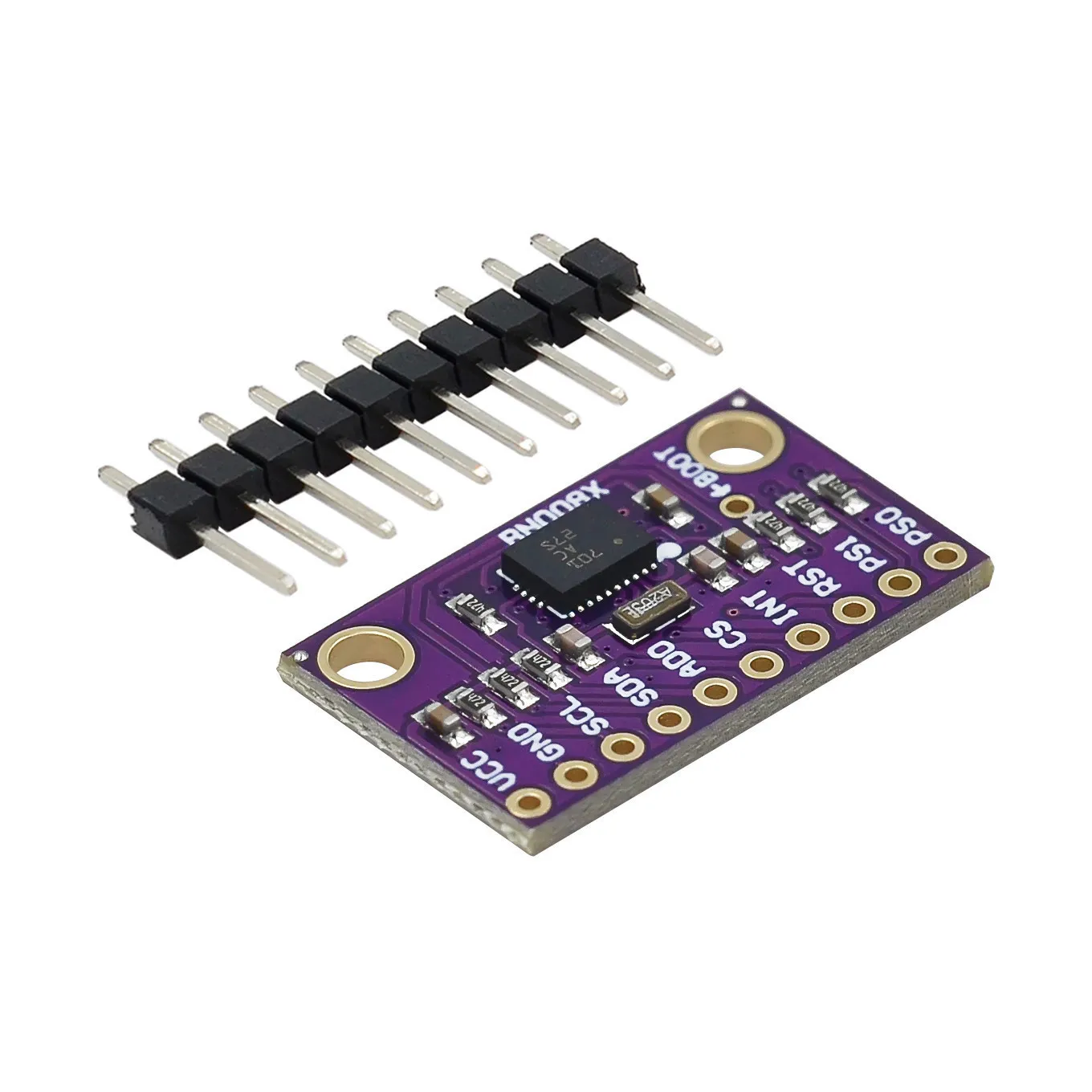
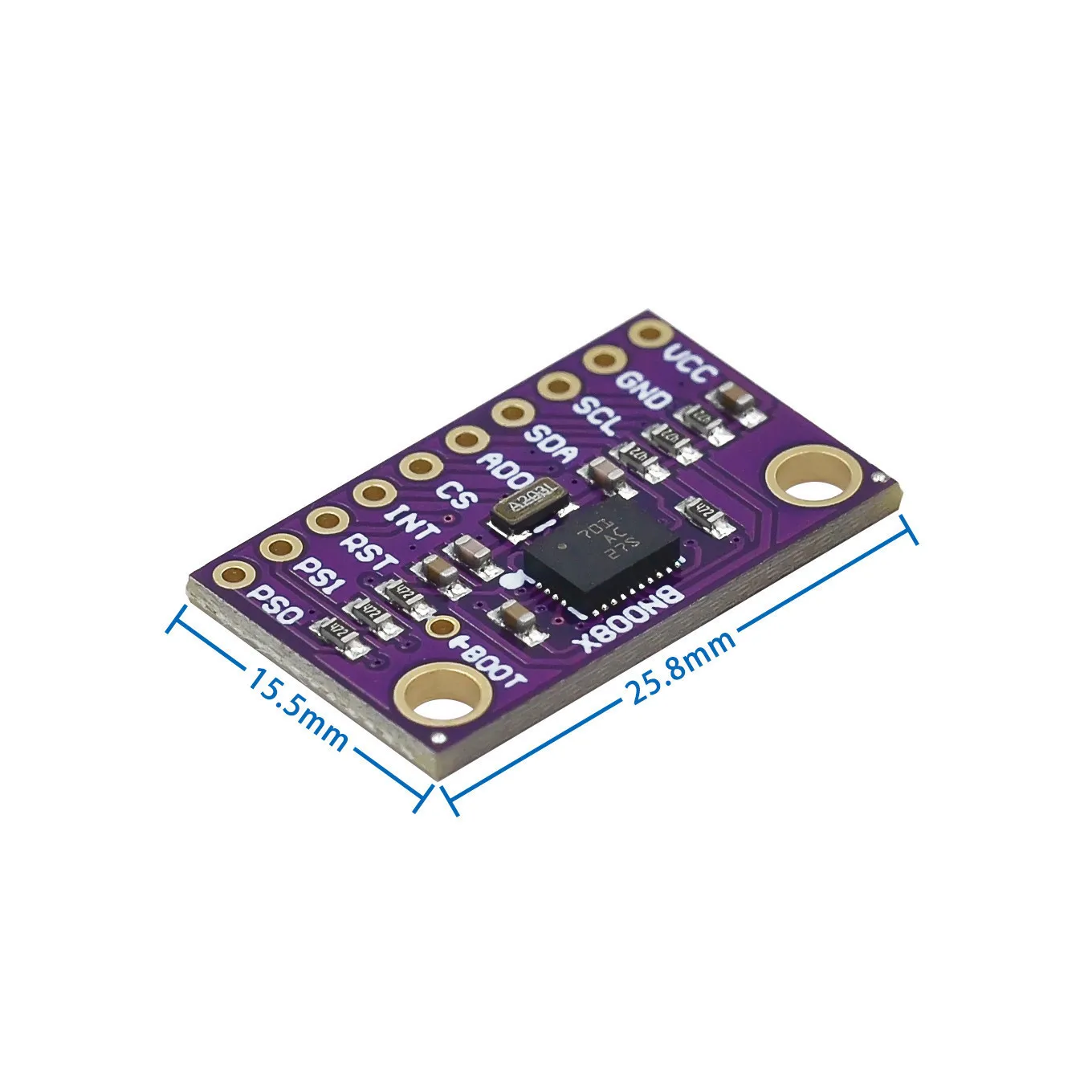
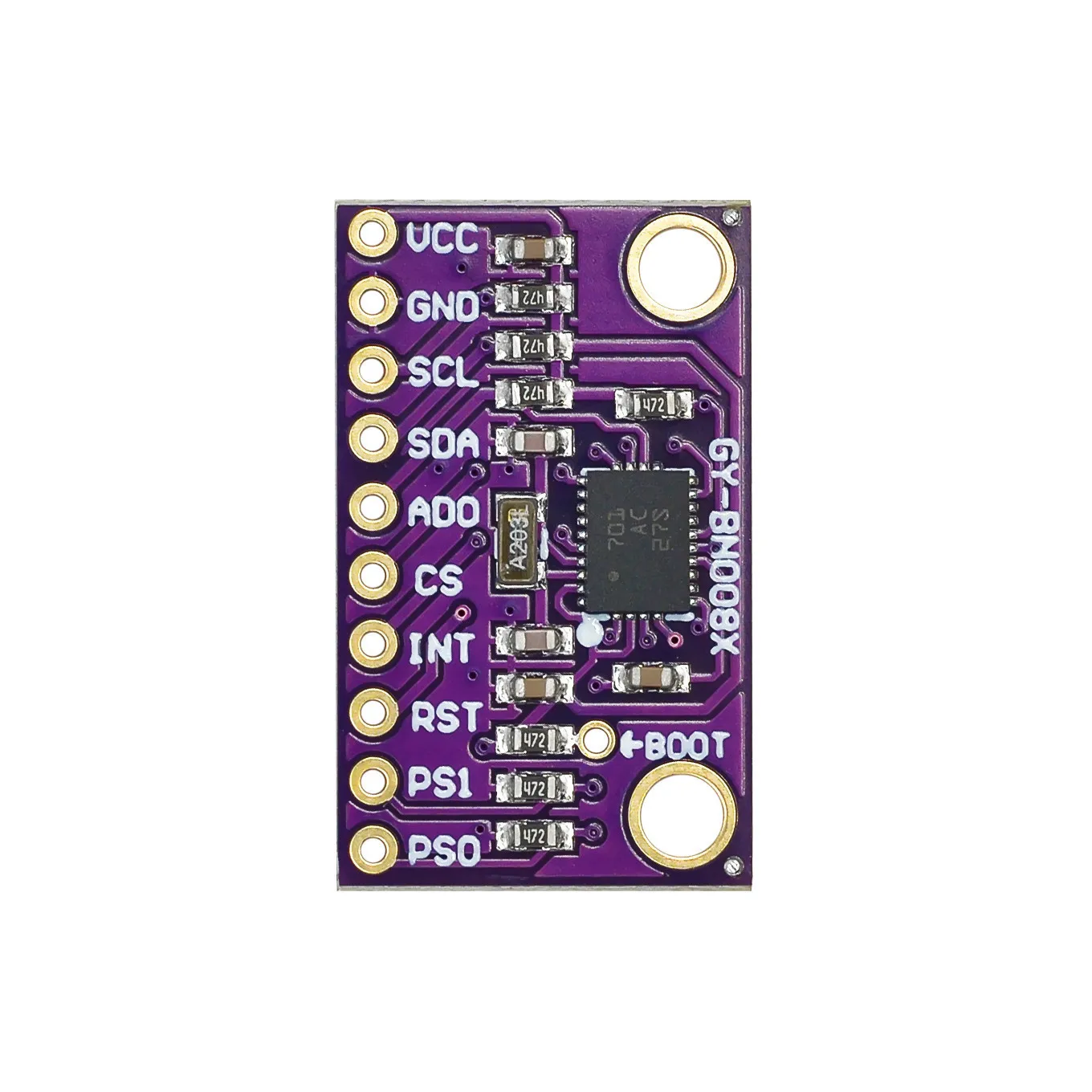
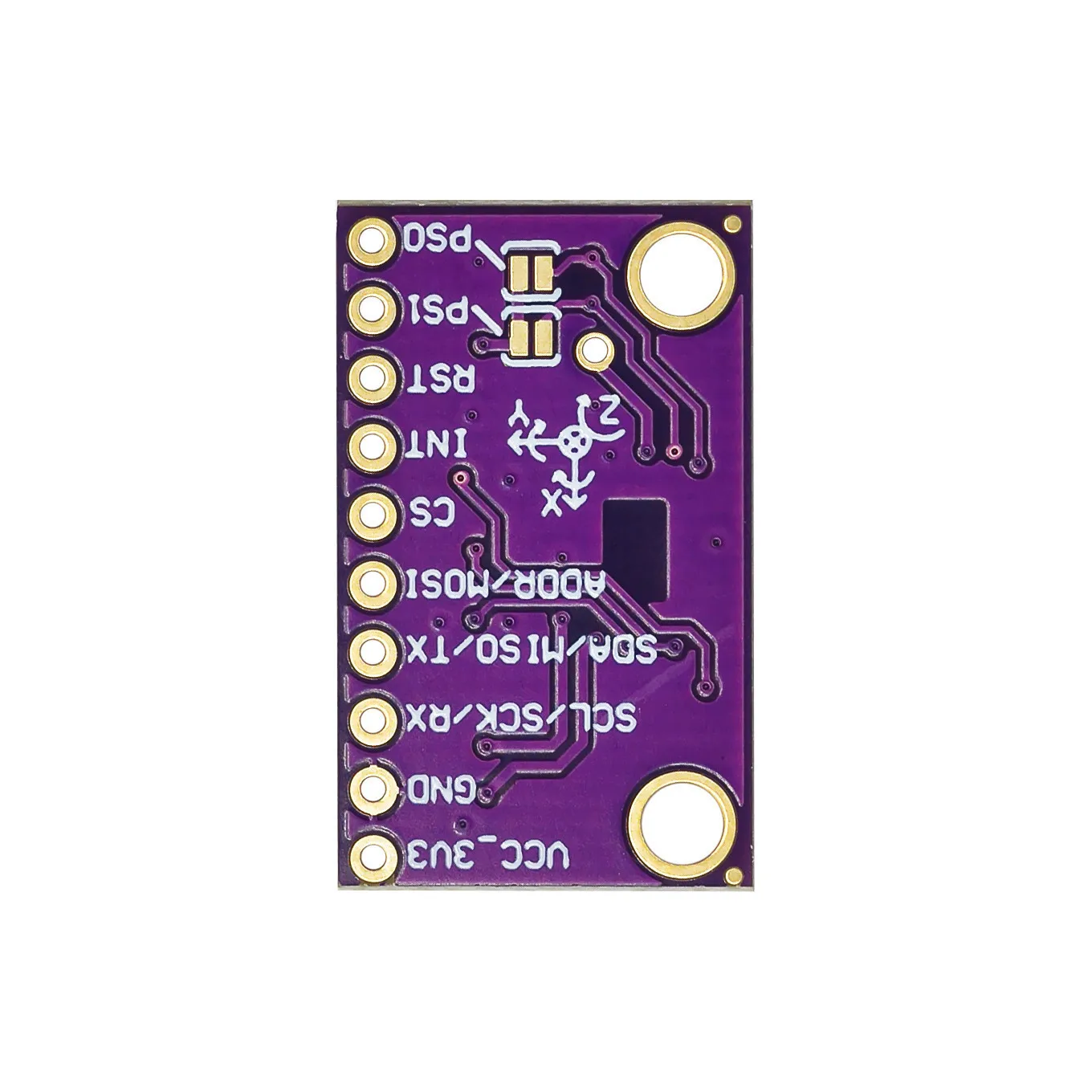 Virtual reality is popular, but you shouldn't have to spend hundreds of dollars to get the technology behind it. Fortunately, this is where the VR IMU Breakout comes in. At its heart is CEVA's BNO086, a combined triaxial accelerometer/gyroscope/magnetometer package system (SiP) in 32-bit ARM©Cortex™M0+. The BNO086 Inertial Measurement Unit (IMU) produces accurate rotation vector headings, ideal for VR and other heading applications, with a static rotation error of 2 degrees or less. The VR IMU is exactly what we've been waiting for; All sensor data is merged and drift corrected into meaningful, accurate IMU information. It's perfect for any project that needs to sense direction or movement.
The IMU splitboard also comes with two I2C Qwiic connectors to make interfacing with the miniature QFN package a little easier. It's part of the Qwiic connection system, so you don't have to do any welding to figure out how things are oriented. However, if you prefer to use a breadboard, we still have 0.1 "spaced pins.
The BNO080 is designed to be used in Android-based phones and can handle all the calculations required for virtual reality glasses using only the phone. For BNO080 EOL, CEVA offers a plug-in alternative to BNO086 with enhanced features (14-bit accelerometer fusion, reduced idle state power and interactive calibration). The sensor is very powerful and comes with a complex interface. Thanks to the jumper on the board, you can choose between two different I2C addresses. Nevertheless, if I2C is not your preferred communication option, the sensors can communicate via SPI and UART! We have also written an I2C-based library that provides rotation vectors (the readings most people want from an IMU), acceleration, gyroscope and magnetometer readings, step counts, and activity classifiers (such as cycling).
It's an ecosystem of I2C sensors, actuators, shields, and cables that make prototyping faster and less error-prone. All QWIIC-enabled boards use the common 1mm pitch, 4-pin JST connector. This reduces the PCB space required, and the polarized connection means you can't hang it up wrong.
Operating voltage
2.4v to 3.6v
Usually 3.3V via Qwiic cable
I2C(default): up to 400kHz
SPI: up to 3MHz
UART: 3 mbps
Rotation vector
Dynamic error :3.5°
Static error :2.0°
Game rotation vector
Dynamic error :2.5°
Static error :1.5°
Dynamic course drift :0.5°/ min
Geomagnetic rotation vector
Dynamic rotation error :4.5°
Static rotation error :3.0°
Gravity Angle error :1.5°
Linear acceleration accuracy :0.35m/s2
Accelerometer accuracy :0.3m/s2
Gyroscope accuracy :3.1°/ s
Magnetometer accuracy :1.4µT
2 Qwiic connection ports
I2C address :0x4B(default), 0x4A
I2C Pull-up Resistance (2.2kΩ)
Power LED
Jump shot
Power LED
I2C pull-up resistor
Address selection
Protocol selection 0
Protocol option 1
Board size :1.0in. x 1.2. (25.4mm x 30.48mm)
Weight :3 g.
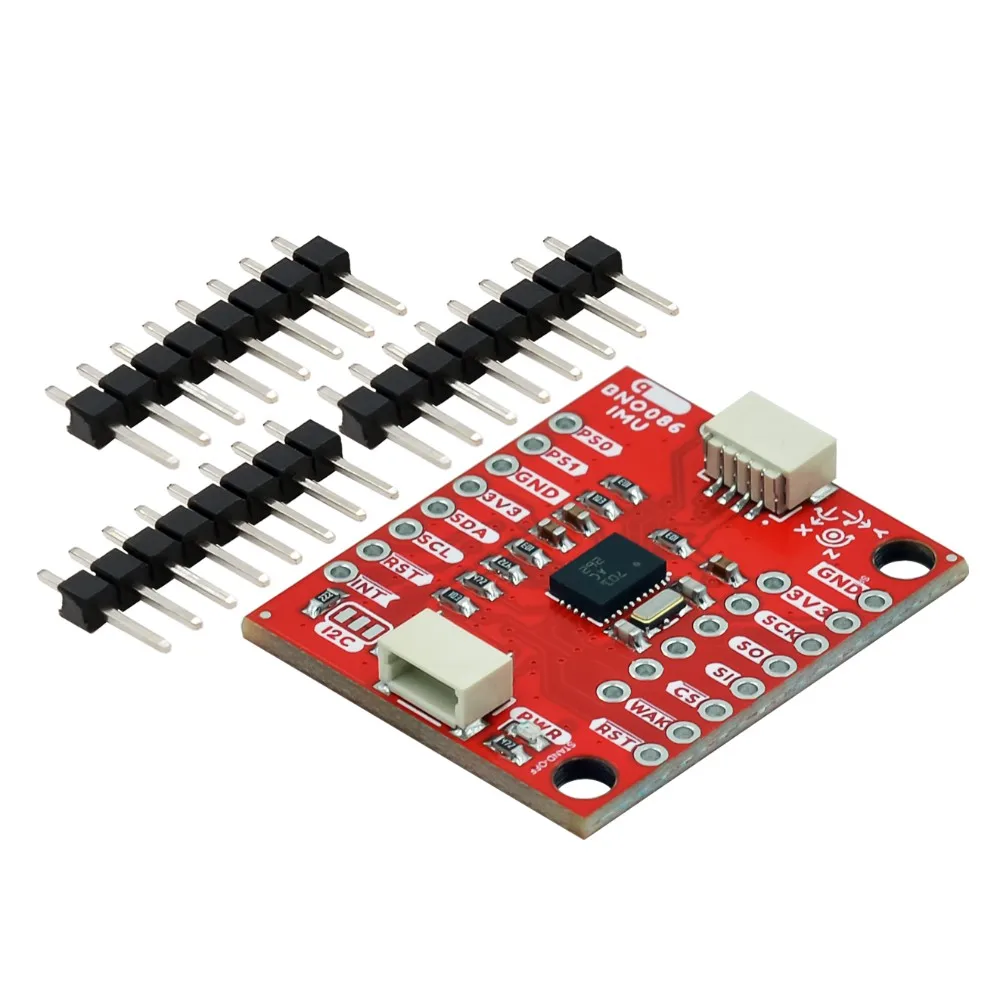
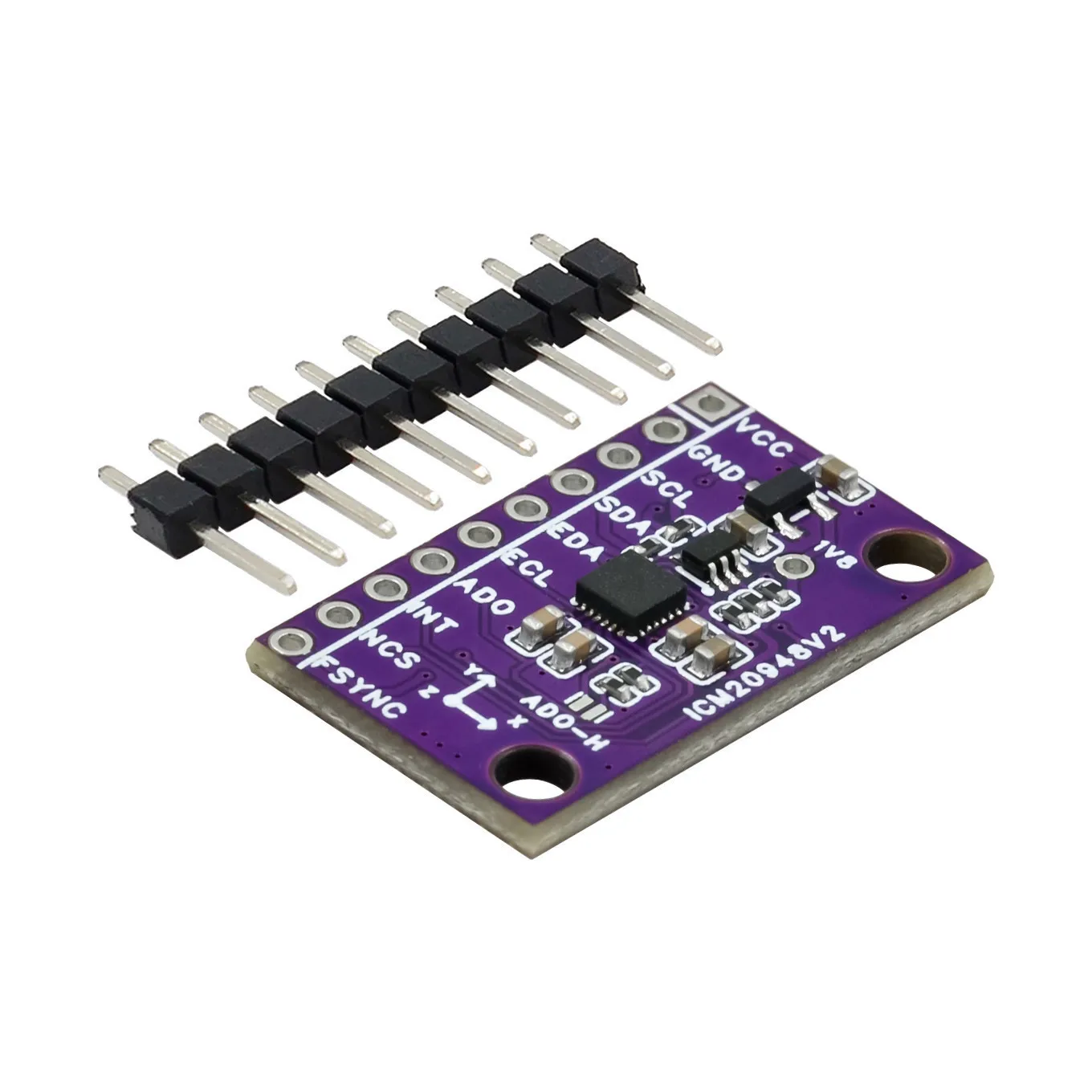
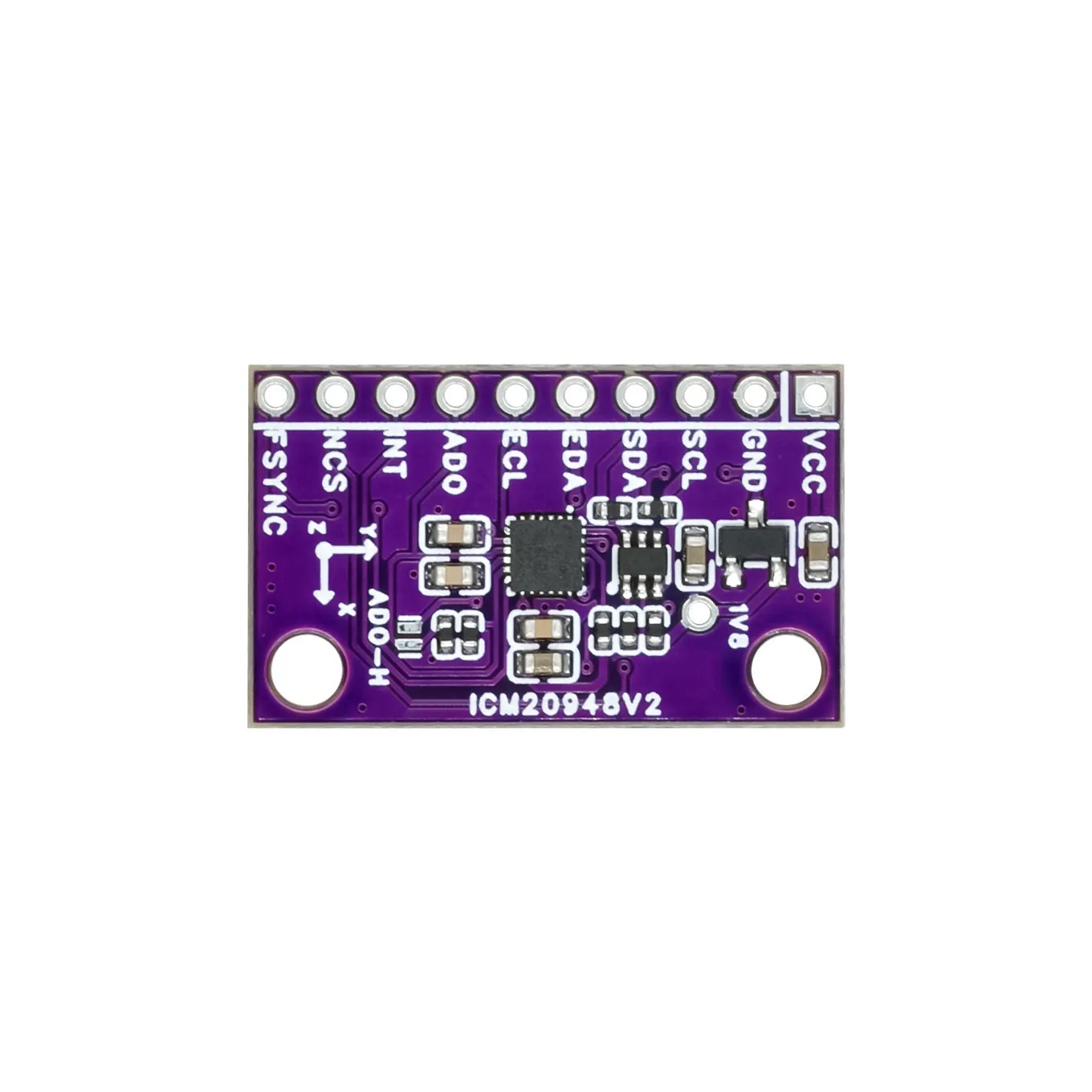
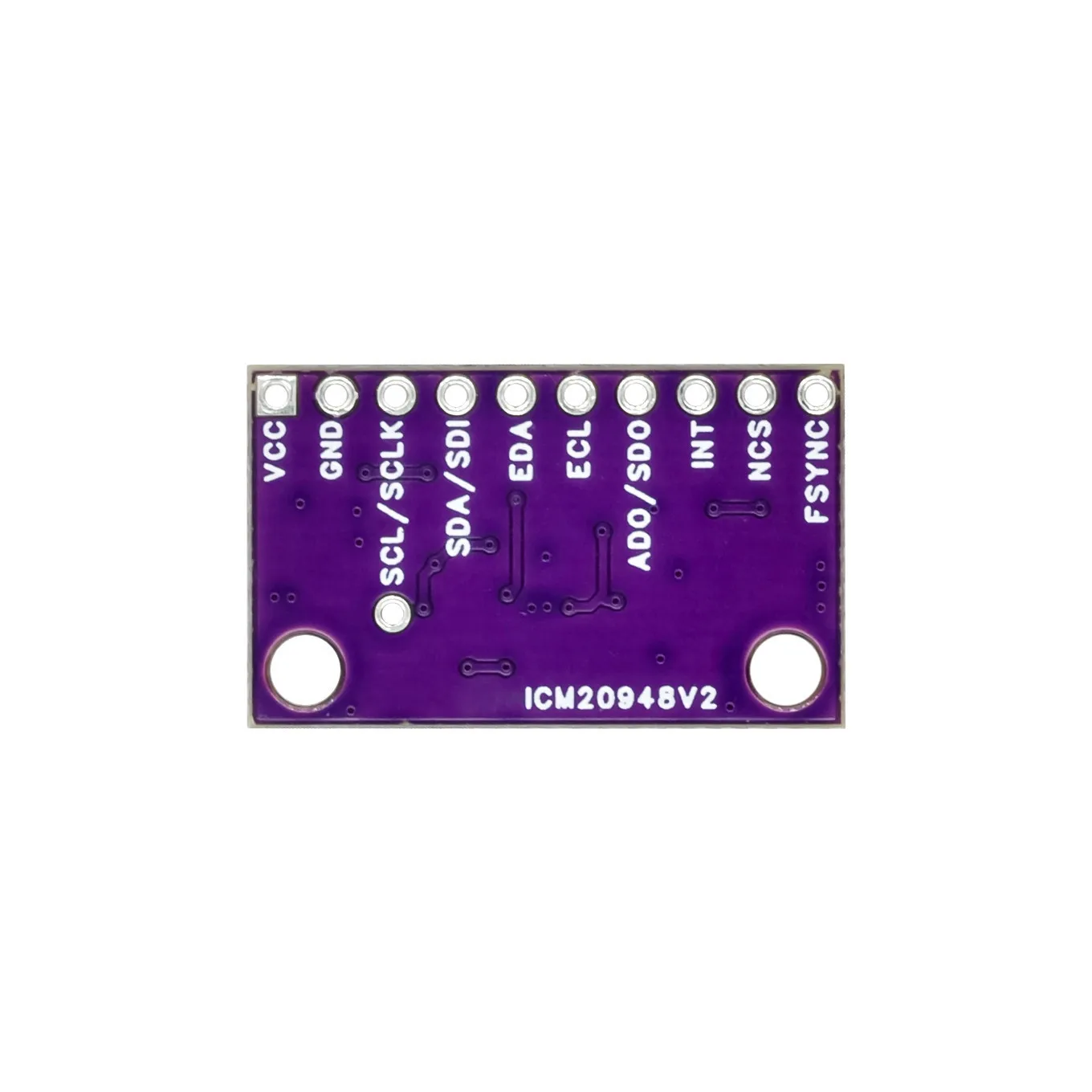
ICM-20948 Nine-axis module:
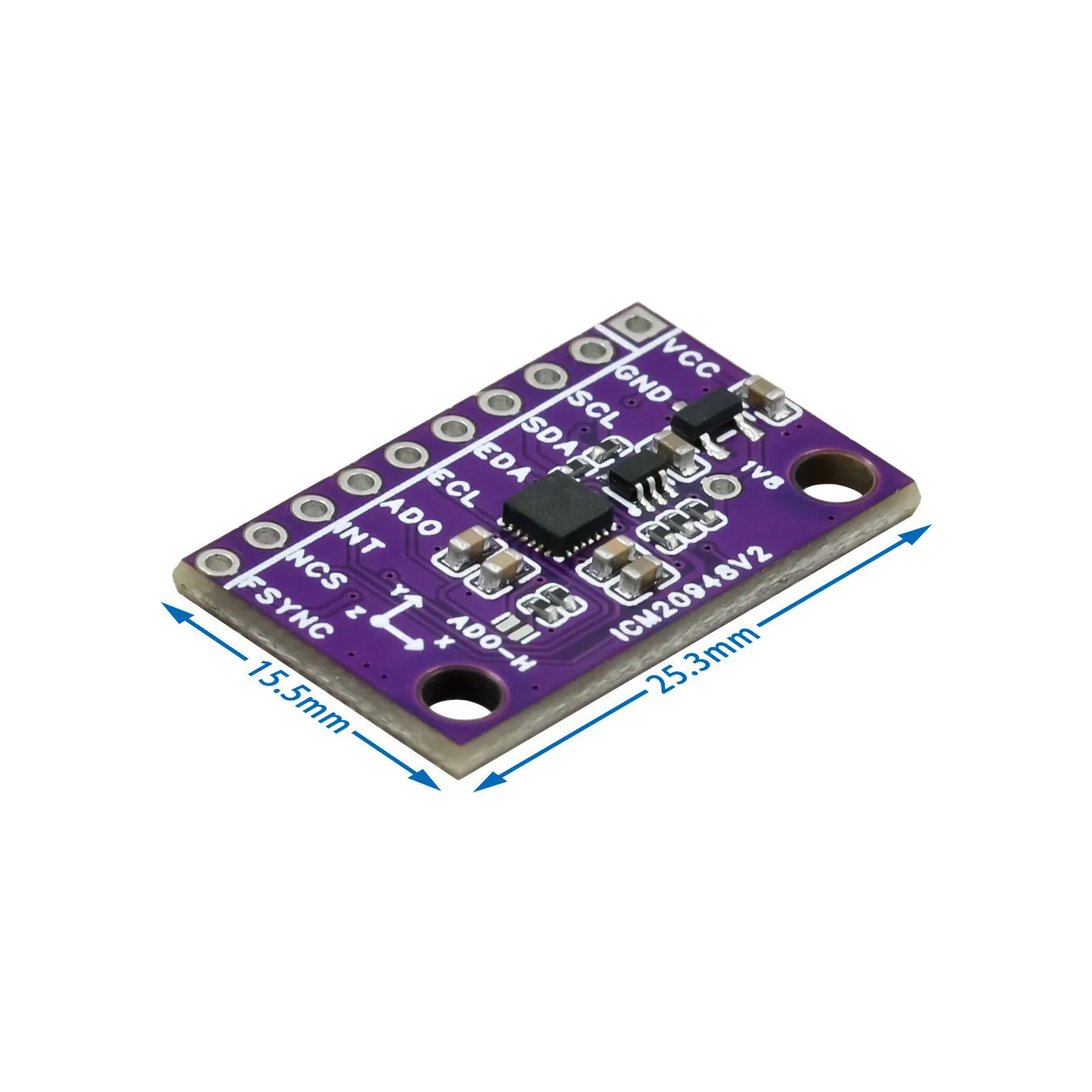
Model: ICM20948V2
Size: 15.5mm*25.5mm
Name: ICM-20948 nine-axis module (three-axis magnetic field + three-axis acceleration + three-axis gyroscope)
Chip built-in 16bit AD converter,16 bit data output
High quality PCB, machine welding process to ensure quality
Chip used: ICM-20948
Power supply: 2-5v (internal low pressure difference regulator)
Communication mode: Standard IIC communication protocol (with level switching)